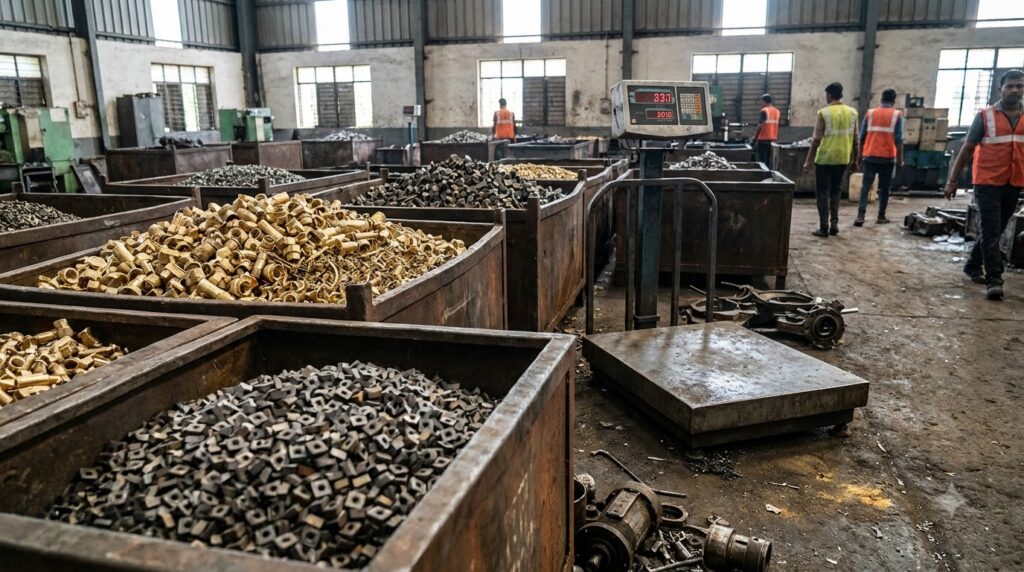
At Dwarkadhish International, our day-to-day work spans both primary manufacturing and active metal recovery. Working directly with machine shops, extrusion lines, and foundries across Jamnagar and Rajkot for more than fifteen years has taught us that profitable sourcing depends entirely on material sorting, honest weighing, and clean chemical grading. Buying uninspected mixed scrap is the fastest way to ruin an entire melt in your furnace.
The Crucial Role of Brass Scrap in Jamnagar Foundries
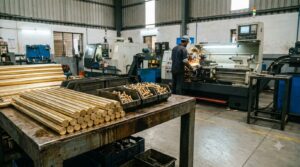
Jamnagar processes massive volumes of secondary brass every single day. The most widely traded and melted categories include Honey scrap, which consists of clean yellow brass solids like old pipe fittings, valves, and water meters, as well as rod turnings and milling cuttings coming off lathe machines. When this material is properly segregated from iron and aluminum contaminations, it melts down smoothly into high-grade billets ready for hot extrusion into new brass rods and profiles.
The biggest pitfall for foundry managers is hidden impurities. Even small traces of iron, silicone, or plastic debris left in a scrap batch will float into the melt, resulting in hard spots, internal air pockets, and brittle billets that crack under extrusion pressure. Reliable scrap suppliers take the extra time to use magnetic separators and manual sorting tables, guaranteeing that the scrap entering your crucible delivers the exact copper and zinc recovery ratio your production expects.
Understanding Tungsten Carbide Scrap and Its Value
Another high-value metal category handled across Gujarat machining corridors is carbide scrap. Tungsten carbide is widely used in CNC turning inserts, end mills, drawing dies, and heavy drill bits due to its extreme hardness and heat resistance. Unlike softer metals, worn-out or chipped carbide tooling cannot simply be reshaped on an ordinary grinding wheel once its cutting edges dull.
Because tungsten is a scarce and expensive global resource, recycling spent carbide inserts, solid carbide drills, and wear parts offers substantial monetary return for machine workshops. Industrial tool rooms collect their dull tool inserts and sell them back to specialized recovery suppliers. This material is then processed, refined, and reintroduced into high-precision tool manufacturing lines, helping CNC fabrication shops in Rajkot and Jamnagar cut their overhead costs and recover working capital from otherwise dead inventory.
How Clean Material Sourcing Protects Your Margins
In scrap procurement, the cheapest per-kilogram offer is often the most expensive in the long run. When scrap contains moisture, excess oil, or uncleaned coatings, you end up paying full metal price for burning off dirt. Furthermore, contaminated raw material increases slag buildup inside electric induction furnaces, wearing out refractory crucible linings much faster and driving up monthly maintenance bills.
Working with an established player like Dwarkadhish International gives you full transparency on weighment and material grades. Whether you are offloading spent carbide tooling from your CNC machines or buying sorted brass scrap to feed your foundry furnaces, our lots are thoroughly cleaned, inspected, and categorized to ensure minimal melting loss. Predictable raw material inputs keep your daily production cycles stable, your casting rejection rates near zero, and your overall profit margins protected.
Connect with Our Material Sourcing Team
If your unit needs regular deliveries of clean brass scrap, rod cuttings, or carbide scrap materials, our sourcing network across Gujarat is ready to assist. You can coordinate directly with our Jamnagar yard at Plot 3460, GIDC Dared, Jamnagar 361004, or visit our regional office at Mahadev Vaadi 3 Corner, Dwarka Nagari, Laxmi Nagar, Rajkot 360005. Call our scrap and metal supply desk at +91 75758 24248 or send your inquiries to info@dwarkadhishinternational.com for current market rates and delivery terms.